Here’s my response to a lively comments thread on the Substack of my good friend Rod Dreher.
Thanks for mentioning me, Rod. Let me link to a piece I wrote recently about this topic.
Even back in the 90s I heard parish priests talking about this pattern (men “get it” sooner than women do). One told me that when a couple comes to talk with him about becoming Orthodox, if they are not united in that goal, 80% of the time it’s more likely to be the husband rather than the wife who’s ready to go.
(That still leaves some 20% to be wives who join the church with a reluctant husband, and there is a recognizable segment of single women too; it’s not utterly black and white.)
Looking back at my own experience, before our 1993 chrismation we were high church (Episcopalian), yet also evangelical, having a close personal prayer-connection with Jesus. My husband loved Orthodoxy at first sight, but I felt like Orthodoxy was somehow distant, that it did not reach out to me personally and emotionally. It was looking at something else.
Since my husband was so sold on it I was willing to go along, and after we were chrismated I quickly came to understand what was going on, and love it. (It was looking at God; the whole congregation is looking at God. It is weirdly a relief not to have to look at self.)
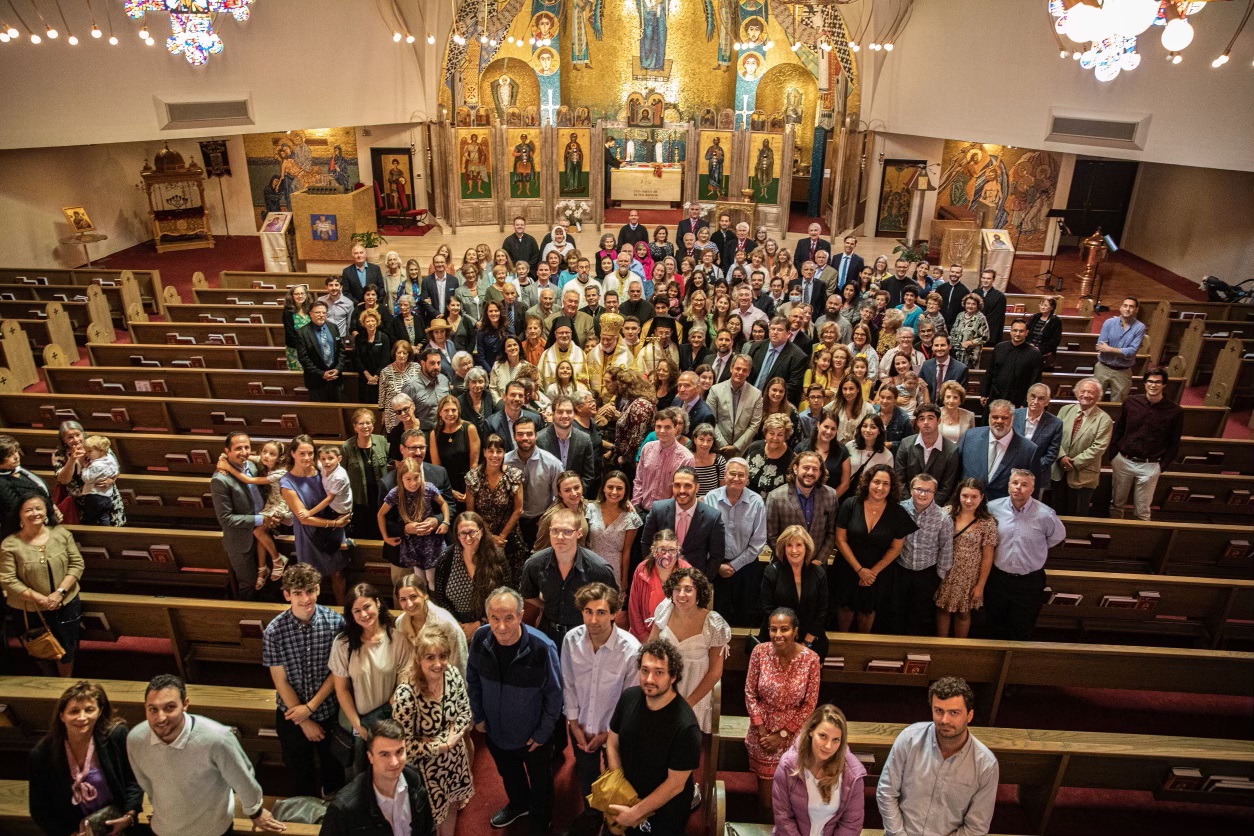
Maybe this men-women summary that was apparent in the 1990s doesn’t fit the way we look at men and women 30+ years later. Yet the pattern persists; when there was a major influx of converts in 2022 -23, the majority was single men, and has since broadened into a tide of couples with young children. At my church, few years ago we had 60 or 70 on a Sunday morning, and now it’s consistently over 250. Churches everywhere are reporting this surge, which mightily stresses the available room and a single pastor’s resources. It’s a good problem to have, but a problem that needs to be solved.
I would say controversially that there is a built-in reason women look at mirrors longer than men do. There’s a reason we find it important to look attractive, and want to sense an admiring focus on ourselves. It’s an evolutionary reason: we are smaller and weaker than men, and without other defenses, we want to feel that other hearts are deeply engaged with us. Western Christianity has done an excellent job of responding to that deep-seated female desire.
Men can maybe do without so much of that, and and find other, more-demanding contexts more appealing. I guess the surprise to me was how much the Orthodox outward, God-centered focus felt right to me, once I began to get the hang of it. Reluctant wives I’ve asked say the same. When we come to love Orthodoxy, we love the same thing our husbands do. And these wives say they “got it” by just continuing to come to worship. The objections they had got resolved without having to be directly addressed, because they just kept showing up on Sunday morning.
Hope this helps! This is something very hard to grasp from the outside, when putting notions of “men” and “women” in front of the thing you’re trying to understand. It’s hard to explain what it’s like without that, what it’s like from the inside. As they always say, “Come and see.”